AdCopy AI
Keeping a human in the loop on thousands of AI-written Google ads
AI writes Google ad copy for A/B testing, and a person approves every ad.
 by
 In partnership with

- more revenue for brands using it
- 20%
- lift in click-through for early adopters
- 15%+
- less time making ad copy
- 90%
The problem
AI can write tens of thousands of Google ads in minutes, but some break brand rules or get facts wrong, and no team can review that many by hand.
What I did
Director of Product Design at Tinuiti, on the Bliss Point platform
I designed the tool, including its human review. People approve or reject ads in short sets, one rejection fixes every ad with the same problem, and their reasons teach the AI the brand’s rules.
Try it first
A working version of the review, with made-up ads for a fictional trail food brand.
Micah’s Mountain MunchiesAdCopy AI
Powered byGeminiReview and approve ad copy.
Up next for you · high priority
“Overnight trips” · Weekend Trip Meals
6 ads to review · about 1 min
Awaiting review
33 sets · about 67 min · 129 flagged
“Overnight trips”
High priorityWeekend Trip Meals
0 of 1 sets“Stocking stuffers”
High priorityHoliday Trail Bundles
0 of 4 sets“Gift-ready boxes”
High priorityHoliday Trail Bundles
0 of 4 sets“Quick camp prep”
Fall Trail Meals
0 of 4 sets“Light to carry”
Fall Trail Meals
0 of 4 sets“Fall flavors”
Fall Trail Meals
0 of 4 sets“Energy for climbs”
Summit Snack Packs
0 of 4 sets
Finished ad groups move to Ready to launch. Rejections teach AdCopy AI what not to write.
Background
AI removed one bottleneck and made a new one.
Companies that get serious about performance marketing put a lot of effort into their Google Ad copy. The quest for a higher click-through rate never ends, so they A/B test relentlessly.
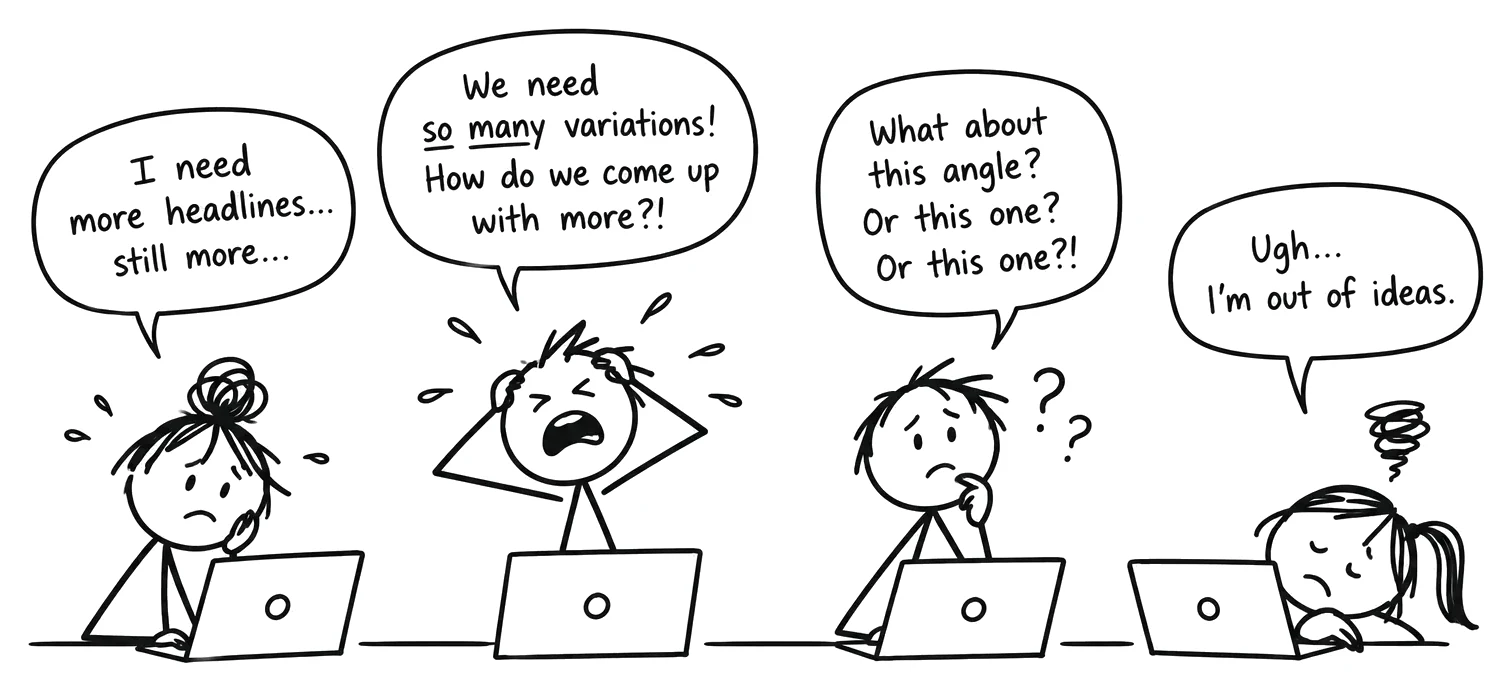
The old bottleneck. Copywriters can only come up with so many headlines.
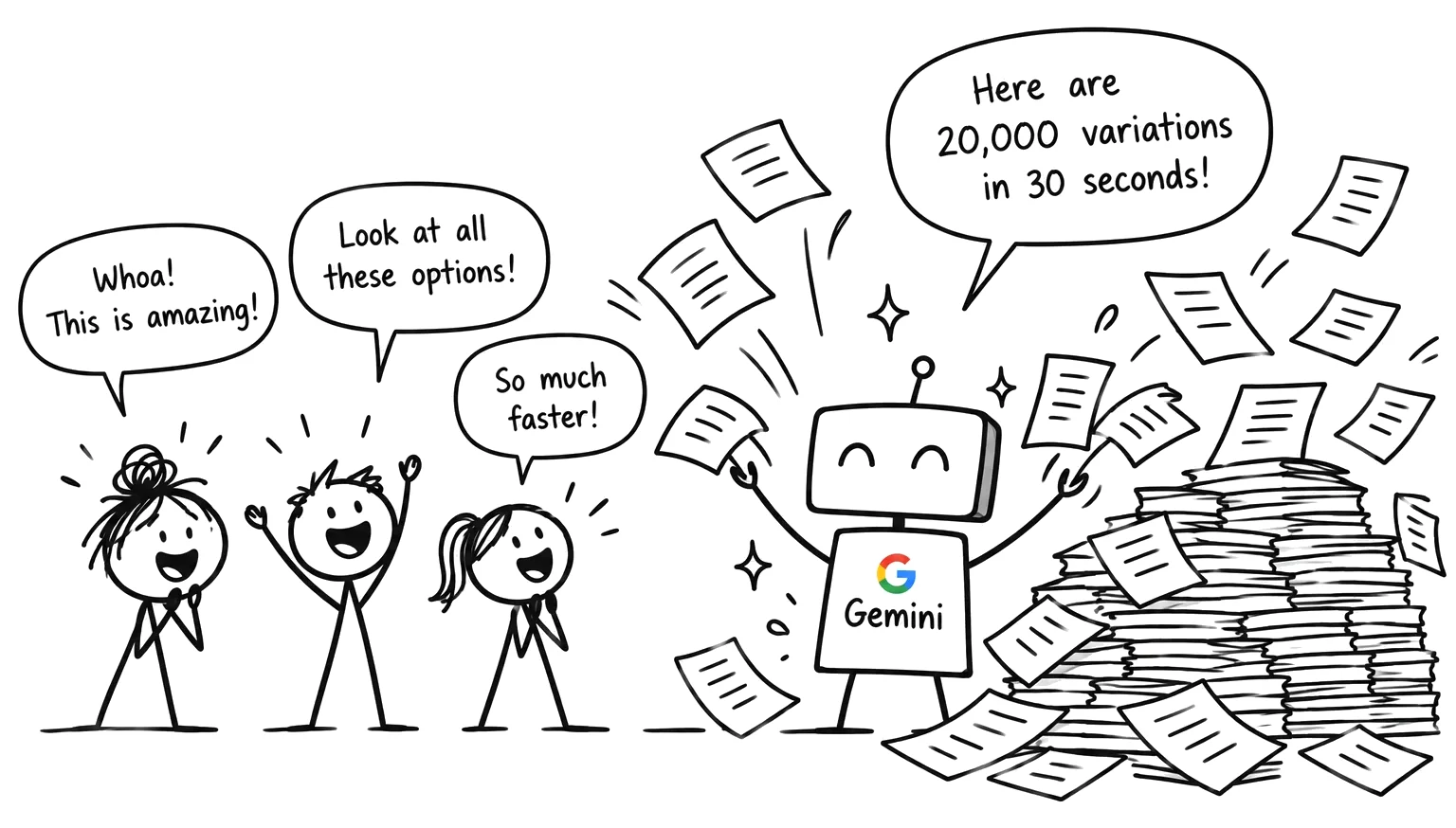
AI to the rescue. 20,000 variations in 30 seconds. Problem solved, right?
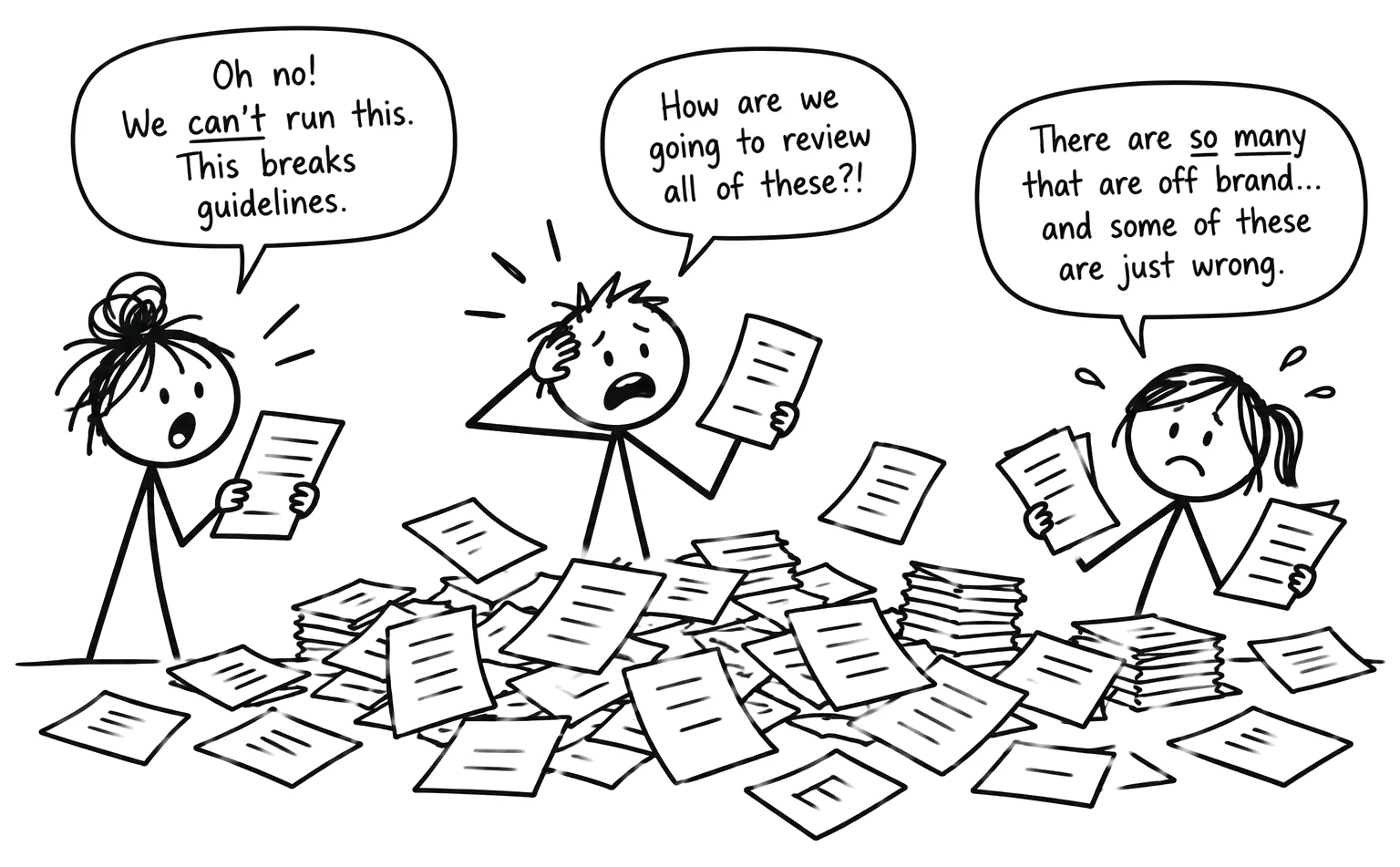
The new bottleneck. Some ads break brand rules or get facts wrong, and someone has to catch them.
Using AI traded an old problem for a new one. Two new ones, actually.
The problems
Off-brand AI, and too many ads to review.
AdCopy AI takes a bit of direction, leans on the brand’s guidelines, and writes tens of thousands of versions of an ad within minutes.
I believe design should come in early. This time, the AI model and data were already built when I got involved. I designed the tool around them, and the hardest part was the human side: the person in the loop, their experience, and keeping the AI on track. That’s where both problems showed up.
AI doesn’t reliably follow brand guidelines.
- It casts a wide net, so some ads always miss the brand.
- As it optimizes for “what works,” the winners sometimes drift off brand entirely.
- Not every brand rule is written down in the style guide it works from.
People can’t review tens of thousands of ads.
Behavioral psychology calls it decision fatigue: too many choices wear people down and their decisions get worse. Faced with 20,000 ads, reviewers either stall or default to whatever looks familiar.
Tired reviewers reject anything unfamiliar, which defeats the whole point of A/B testing.
Somehow, we needed to keep the people happy and sharp. That meant making everything as easy as possible, from learning the review to doing it well.
The solution
Short review sets, where one rejection fixes many ads.
Behavioral psychology has a fix for decision fatigue. Think about a restaurant menu. A six-page chonker keeps you browsing long after you’ve filled up on breadsticks. From a six-item menu, you choose quickly.
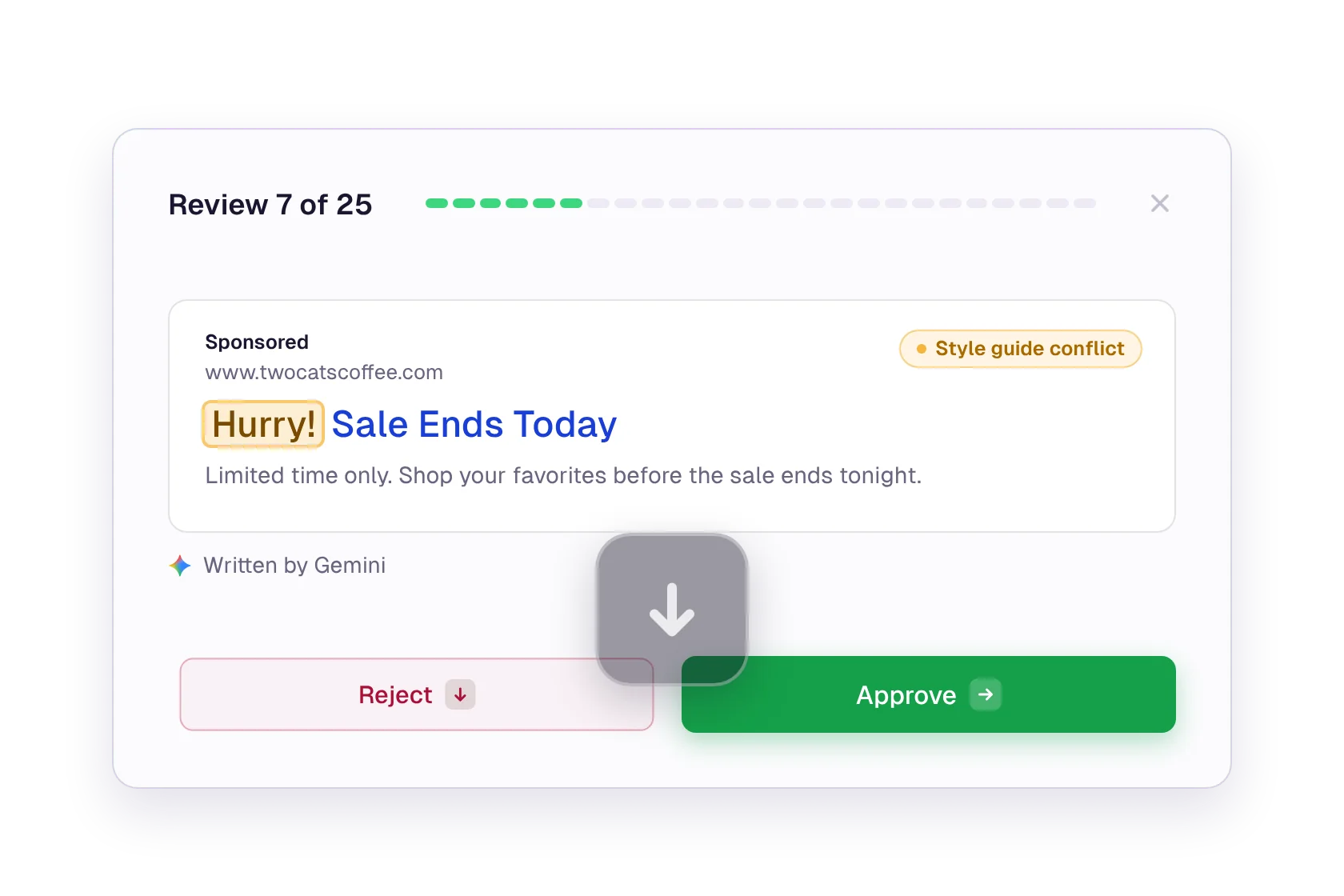
So reviewers get a little at a time: a short set of ads, rejecting only what doesn’t work. Each rejection asks why, and can catch every ad in the set with the same problem. A single “Nope!” does the work of many.
Review a set
Ten made-up ads. Approve or reject each one (or click in and use your arrow keys), and reject a “Hurry!” ad to see it catch the others.
Fresh Roasted Coffee | Free Shipping Over $50
Small-batch beans roasted every week and shipped the same day.
✦ Written by Gemini
Inside a rejection
Tap a number to see the thinking behind that detail.
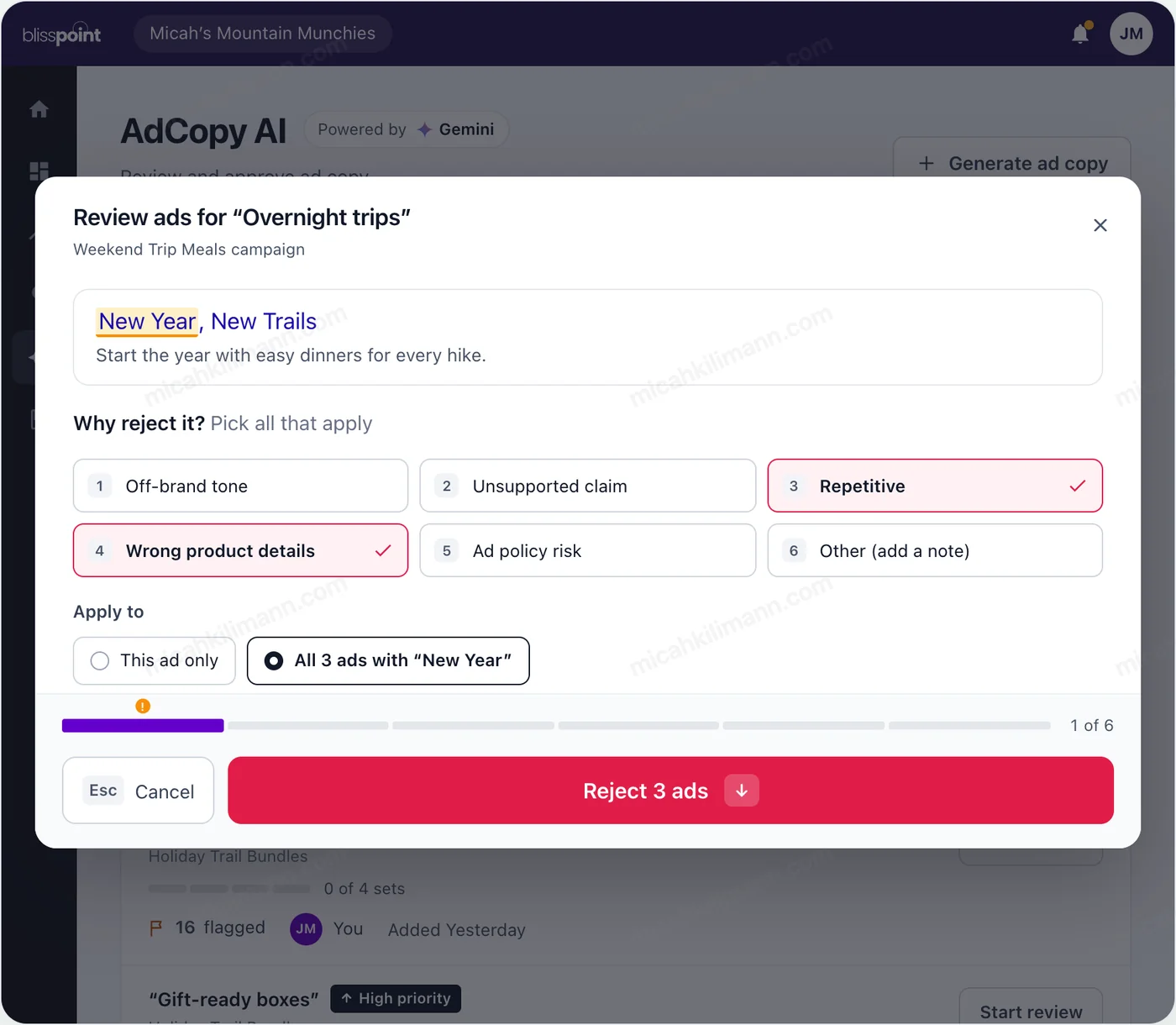
Because each set is only a handful of ads, nobody bites off more than they can chew. The queue serves up the next short set and says how long it’ll take, so it’s easy to do 2–3 in a row.
- “Stocking stuffers”0 of 4 sets 16YesterdayStart review
- “Gift-ready boxes”0 of 4 sets 16TodayStart review
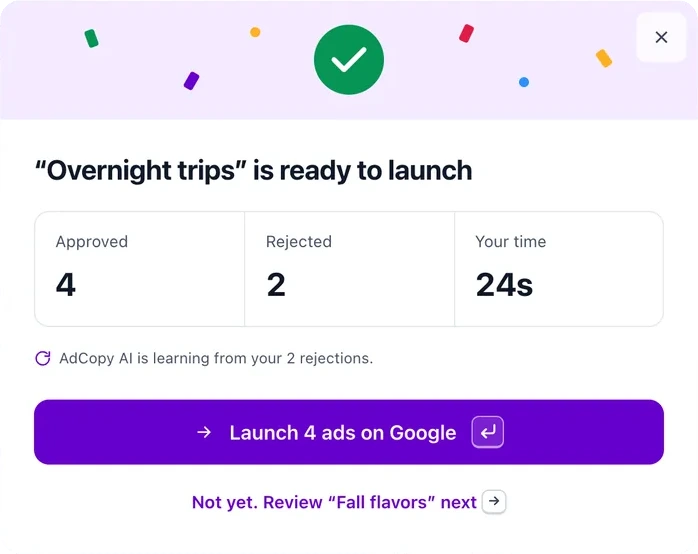
I also gamified it. More behavioral psychology! Finishing a set shows your stats, progress and impact.
People who tested it said it made them want to review just one more set.
AI people can trust
What I bring to any product where AI does the work and a person is accountable for it.
People decide. The AI proposes.
Nothing goes live without a human yes, and that yes has to be quick to give.
Small batches keep judgment sharp.
Short sets with a natural place to stop. Tired reviewers approve whatever looks familiar.
One correction fixes every copy.
If the AI misspells the brand name once, it did it everywhere. Rejecting it once should catch them all.
Corrections should teach.
Rejection reasons go back to the AI, so the same mistake doesn’t come back.
Show progress and impact.
People keep reviewing carefully when they can see what their work is doing.
The goal isn’t less human involvement. It’s human involvement that counts.
The result
20% more revenue, and 90% less time on ad copy.
- lift in click-through for early adopters
- 15%+
- higher return on ad spend
- 20%
- less time making ad copy
- 90%
What I’m proudest of is the feedback inside Tinuiti. If you’ve ever had to babysit AI output, you know how soul-sucking it can be. Somehow, I helped protect people’s souls from being sucked.
Others have credited AdCopy AI’s performance and ease of use with helping them win pitches and bring in new clients.
“Greater performance and more variations with less manual lift.”
Feedback from inside Tinuiti
Want to talk through this project?
I’d love to walk you through it, including the parts I couldn’t show here. Ask me about:
- How rejection reasons teach the AI the brand’s rules
- Why clients see only the flagged ads
- Designing the human side after the AI was already built